
Showing posts with label Culture. Show all posts

Wednesday, January 5, 2011

David Whitley’s Thoughts on the Unreal

For me, the most ethereal faerie enchantments have just as much charm as a solid piece of sci-fi hardware. I love the unreal: the power, and wonder, and delight of worlds where nothing can be taken for granted, and everything is new.

The only question is...why?

What is it about fantasy that is so beguiling? I mean, one of the cardinal rules of fiction is supposed to be the possibility for the audience to identify, to sympathise with the characters and recognise their own lives. In Poetics, Aristotle suggested that the purpose of fiction was to purge emotions, to let us experience all the joy and grief that, were it real life, might otherwise overwhelm us. (Whitley’s article)

What do you think?  Why do you love the unreal in fantasy?

Tuesday, December 7, 2010

Back in the Bin

I did it again. Just like I did with Terry Goodkind and Ben Bova (and should have done with R. Scott Bakker), I took a book back to the library after reading about 20% of it. I don’t plan on ever looking up anything by the author again.

Which is a shame. Ian McDonald’s River of Gods holds so much promise that I hated to put it down, but put it down I did.

To bring you up to speed: McDonald’s near future (2047) collage is set in India on her 100th anniversary, a moment of great unrest for the country and the world. Of course man-made global warming has brought about unprecedented changes and unpredictability in earth’s climate, here actualized by a drought leaving India with a waste of her heartland rivers. India (and the United States) have fragmented into conflict-ridden sister-states, and of course the novel is set on the brink of war.

Add into the mix a generous helping of late-late scifi chrome: aeai’s (AIs) are core to the plot, having been outlawed in the US because of Bible-thumping moralists, are springing up everywhere in India, such that enough go bad to cause the creation of a branch of law enforcement, the “Krishna kop”. User interface technology piques in the “’hoek”, a straight-to-the-brain Bluetooth device that rich people use to beam in their diets of information. Huge remote-controlled combat robots (the only ones we see are the ones created by the US, remote controlled by cowardly pilots half a world away, or stolen from them and put to more personal purposes) roam the humid streets destroying randomly (at least from the point of view of the plot).

And then, into this weave of technology, add a generous helping of social scifi—genetically engineered “Brahmins”, physical children who have the sexual appetites and financial resources of 14th century French aristocrats; “nutes”, surgically modified people with no external sexual organs, but with sub-dermal control panels that allow other intimate nutes to do much more with them than any mere physical genitalia ever would. All the modern and post-modern obsession with personal consumption and sexual license.

Stir and set into motion.

I found myself interested in where things were going, but increasingly tired of the usual dystopian tropes. Even 20% in I could see the nihilism and bracingly cold scientism teasing out the strands of the plot. And to top it off, the real deal-breaker was the relentless ultra-graphic sex scenes. I mean the kind that couldn’t be filmed without an NC-17 rating. Every five pages. Even if I wanted to see where this went, I’d have to wade through all that muck. And the America-is-the-devil-ism. And see-I-told-you-so environmentalism. And the gleeful abandonment of the human family at every level.

So back in the bin it went.

According to the web, this is the sort of book the people award highly (the author has a number of prestigious awards to his credit). Clearly this is forward thinking, progressive scifi at its best.

Fine, whatever. But who is writing good books in the genre these days?

Saturday, December 19, 2009

Reading lately

I've finally gotten back to a regular reading habit and I've hit upon some real gems (as well as sifting through the colored glass).


Chris Roberson's Paragaea:  I wanted to like Roberson's Paragaea.  It is marketed as coming from the adventure tradition of E. R. Burroughs (Tarzan, a Princess of Mars) but is very much out of touch with such works.  While it shares a fast-paced plot across a pleasantly unbelievable landscape, the driving characters are so shallow and motive-less that I ended up trying to read around them.  I liked the world they explored, the characters they interacted with, and some of the action sequences and mysteries were involving.  Ultimately, though, the characters had no good reason to strive for much of anything at all and the ending seemed forced and abrupt.  2/5 stars.


Lars Walker's Erling's Word:  Easily the best historical fantasy I've ever read.  Takes actual historical figures (Erling Skjalgsson) and treats the spirit-haunted world they lived in as tangibly real.  Somewhat brutal (as those times were) and not afraid to dive straight into the complicated relationships between religious traditions of the time, this book isn't for the faint of heart.  If you've ever wondered if a story could treat the Christian faith as fairly as the indigenous populations' religious traditions, here's a story that does so marvelously.  Pure genius.  4/5 stars.  FYI, getting a hold of Erling's Word is a little tricky, since this book is out of print.  I haven't had too much trouble finding used copies at my local bookstores.

Stephen Hunt's Court of the Air:  I'm only about halfway through this book and I'm enjoying it so far.  It's a mature example of the recent "steampunk" trend, and easily the best example I've read so far.  Far warning:  the book takes a lot of work to get into, the author having a lot of world to throw at you in rapid-fire fashion.  But, if you can manage the first 70 pages or so, you'll find yourself acclimatized and enjoying the ride.  Hunt needs to be congratulated on cramming so many cool ideas into so few pages.  I'm looking forward to seeing where this one goes, and I'm glad to see it already has a sequel.


Barnes and Noble's Complete Fiction of H. P. Lovecraft:  Somebody decided that December was Cthulhu month, a fact which I must have intuitively known, since I've been digging through my big collection of H. P. Lovecraft's stories.  I started at the very beginning and read some of his earliest stories, including some prose poems.  If you don't have this mammoth complete collection from Barnes and Noble, you need to pick it up.  It isn't expensive and the printing is very high quality.  Otherwise, you'll miss the rarer gems of Lovecraft's work not often seen in other collections.

Saturday, October 31, 2009

Aiming for the wrong target

Remember the story from a recent Olympics when the athlete nailed the bullseye perfectly, and then was disqualified when they pointed out the fact that he was aiming at the target in someone else’s lane?  Ouch.
I got to thinking about our medical technologies that are proliferating like cyberrabbits.  The fastest growing categories are the “lifestyle” drugs which don’t treat injuries or life-threatening illnesses.  I know there are a lot of good things happening here, but it seems like I run across stories where it gets weird pretty fast.

Wednesday, May 13, 2009

What’s happening to the city?

For those of us watching cultural trends, it seems that there is a renewed focus on establishing the live-ability of the urban, downtown environments of our cities.  Lots of development work is going in to recapturing failed sections of cities, buying out old industrial districts and turning them into hip, upscale community centers like The Pearl in Portland.

But live-able for who?  I came across an article by Joel Kotkin recently who has done extensive research on the migrations of people in and out of these new urban centers.  There are some concerning trends:

City planners and urban developers favor the unattached: the “young and restless,” the “creative class,” and the so-called “yuspie”—the young urban single professional. Champions of the unattached suggest that companies and cities should capture this segment, described by one as “the dream demographic,” if they wish to inhabit the top tiers of the economic food chain.

Another key group coveted by cities are the legions of baby boomers who have already raised children. No longer cohabiting with offspring, they are expected to give up their dull family existence and rediscover the allure of a fast-paced, defiantly “youthful” lifestyle. The new retirees, suggests luxury homebuilder Robert Toll, “are more hip-hop and happening than our parents.” They are more interested in indulging “the sophistication and joy and music that comes with city dwelling, and doesn’t come with sitting in the ’burbs watching the day go by.”

I immediately thought of the Pearl District in Portland, a place with which I have sort of a love-hate relationship.  On the one hand, it is filled with cool shops, the best of all being Powell’s Books.  There are fabulous one-of-a-kind restaurants within easy reach.  The arts and parks are wonderful and the walking experience is a feast for the senses.  The light rail will take you anywhere else you want to go.

But I’ve often wondered what people with a four year old and a two year old do.  You don’t see people with kids very often wandering around Pearl.  I even went to the Pearl’s guide web site and looked for what I assumed would be some upscale schools, fancy boutiques for urbanite moms looking to buy their daughters some designer eco-friendly toys.  But a look at the marketing, photos, and highlights leaves the married-with-kids out of the mix.  Look for yourself.  You see the two demographics mentioned in Kotkin’s article.

I wonder what sort of effect this will have on smaller communities like Salem.  I know Salem wants to be like her big sister to the North and is on a rampage to upscale its downtown along these same lines.  Is the lifestyle of the “unattached” the goal of our vibrant urban centers?  What happens when newly-forming young families are forced to choose between the hip urban lifestyle and one that includes the possibility of children?  Is this a wise development choice?

Tuesday, May 5, 2009

Jorge Luis Borges: Literary Fantasist

Everything depends on the color of the room.  At the illustrious and legendary Powell’s Books in Portland, Oregon, each room is given a color, a sop thrown to those poor souls who have only begun to explore the vastness of the multilevel edifice.  If one is in the blue room, one can expect to come across the likes of John Steinbeck, James Joyce, Jane Austen.

Just up the way, at the top of a steep staircase, one enters the gold room where J. R. R. Tolkien mingles with the likes of Stephen King, Dungeons & Dragons pulp novels, and H. G. Wells. 

The former room is the rarefied air of the literati, the latter a room for nerd-fantasy and women with strange hair.  The room in which one stands will determine how this paragraph ends:

I mentioned earlier that the wooded hill at whose foot the village sprawled was not really very high; it was flat on top, a sort of plateau.  On the other side of the mountain, toward the west and north, the jungle began again.  Since the slope was not a rugged one, one afternoon I suggested that we climb it.  My simple words threw the villagers into consternation.  One exclaimed that the mountainside was too steep.  The eldest of them said gravely that my goal was impossible to attain, the summit of the hill was sacred, magical obstacles blocked the ascent to man.  He who trod the peak with mortal foot was in danger of seeing the godhead, and of going blind or mad.

I did not argue, but that night, when everyone was asleep, I stole soundlessly from my hut and began to climb the easy hillside.

If one picked up the story in the blue room, one will find that the villagers are superstitious, deluded fools and that the narrator discovers something important which will benefit an enlightened world, or else something about his inner man that such a “spiritual” journey might reveal.  And if the text in question was taken up while standing in the gold room, the narrator will find a necromancer looking to steal his soul, an enchanted sword or amulet with which he can defeat the hordes threatening to invade his own lands, or perhaps a spacecraft of such splendor that the natives foolishly ascribe to it something of the divine.

But if by the vagaries of fate, one stood in the blue room and came across a tattered copy of “The Book of Sand and Shakespeare’s Memory”, one would find a most remarkable conclusion to the story.  There would be no realist’s dismissal of the numinous, no triumph of naturalism over the inexplicable or the one-of-a-kind.  One would be left with the uncomfortable tension that any real person with his feet on the ground might feel if faced with, say, a photograph in a newspaper of his own dead body.

Yet Mr. Borges does not quite belong in the gold room either, since half the other stories alongside this one would concern themselves with gauchos, a lost heydey of Buenos Aires, and the fears of old men faced with encroaching blindness.

Jorge Luis Borges stands in a unique stream of fiction called “Magic Realism”, dealing with intersections of our ordinary world with troubled interruptions of the impossible and the numinous.  Sometimes the interruptions are dealt with matter-of-factly, as if the author were explaining the process of spreading jam on toast.  Other times, we share in the narrator’s confusion and frustration at the unreliability of memory, not least of all when it is faced with the memory of an impossible event.

Permit me to recommend Borges to you, regardless of the kinds of fictions you enjoy.  Allow yourself to be knocked off your step in this “ordinary” world.  Remind yourself that not all that seems impossible is such.

Sunday, February 8, 2009

Thoughts on living in time: the sunset as beginning

photoMelissa and I enjoyed some time on the Oregon Coast recently and one of our favorite things is to go down to beach near sunset.  Watching the liquid gold in all its flaming fury melt into a horizon of cold, blue darkness is one the amazing experiences granted to those who visit the rugged Oregon coast.

Let me ask you this:  what does sunset mark?  The end of a day, or its beginning?

From Genesis 1:

God called the light "day," and the darkness he called "night." And there was evening, and there was morning—the first day.

It is the small differences in perception that lead us to radically different destinations.  God saw and named each day “backwards” according to the reckoning of our modern clocks and calendars.

According to our current convention, the day begins somewhere in the dark hours set by the arcane arts of the mathematician and astronomer.  But in terms of how we actually live, the day begins at sunrise (or I-rise, whenever I can stumble out of bed, darkness or no).  We scramble out of bed and the day assaults us with tasks and demands.  Even for the early riser, the day approaches us like the revolving steps of an escalator, and we can only wait so long before setting our foot on the moving steel.

And we are carried thus into a day of work, to be deposited somewhere near its end, darkness gathering (at least most of the year, for us Northwesterners).  We settle into our homes, eat one last meal, together with our families if we can manage it, and then wind down after the whirlwind with the television or a book (or facebook).  At last, we conduct the closing rituals of a wearying day: the swaddling of children in pajamas, the brushing of teeth, the locking of doors, the turning off of lights.  Another day gone, ground into fragments by the jaws of time. 

On our pillows, we ask ourselves at the end of that day: What did I accomplish?  What happened to me?  Was it worth it?  If it was a good day, we close our eyes with the satisfaction that we accomplished something, that we enjoyed ourselves, that nothing bad happened to us.  If it was a bad day, we end with the lingering frustration of important things yet undone, the emptiness of a joyless day, licking the wounds of arguments, things said or unsaid.  And such thoughts trouble our dreams.

imageSuch is the legacy of our culture: our keeping of hours, our reckoning of time.

But for those who look carefully at the words of Scripture in Genesis, there is another reckoning of time available to us.  It is very strange:  what sense does it make to begin the day in gathering darkness?  The ancient Hebrews looked for the appearance of the first stars of evening as the mark of a new day.  For a culture lacking the graces of fluorescent light and Jay Leno, the Hebrews began their day with preparations for sleep.  Backwards, we say.  Day begins at daybreak!  When I arise, when I meet the day, when I arrive on the scene—that is when my day begins!

Already the Holy Spirit is doing His work—we wince a little, knowing better than to entertain long these sorts of thoughts.  We know that we belong to another, that we are not the center of the world or the locus of history, that it is not strictly my day, for “this is the day the Lord has made.” (Psalm 118:24).

We know these things, but it is difficult to live them faithfully.  We mean to depend on God, we know He is at work around us (somewhere…), we trust that God cares for us, has meaningful things for us to do that matter both to Him and to us, and that He hears our prayers.  But once we say the closing amen, we cannot help but lose our spirit of dependence.  We shrug.  And we take up the reins of life ourselves.  We don’t mean to live life this way, but we cannot seem to depend on God anywhere but on our knees.

Allow me to propose as one way toward depending more fully on God that we obey these Scriptures in Genesis.  Let me be clear:  there is no command in this text; this is narrative Scripture.  Scripture like this functions very differently in the life of the church than other kinds of Scripture.  Some of us are used to seeing this text as a battering ram against science or evolution; some of us have been on the giving or the receiving end of those battering rams.  Let us set these things aside and obey this text.  For narrative (and especially poetic) Scripture like this, obeying means letting the rhythms, the imagery, and the perspectives get into us.  To filter past our reason, beyond the part of our heads that think systematically, and down into the deeper parts of us.  Where our habits are rooted, where our perceptions are shaped, the deep soil out of which all our behaviorial fruits grow—that is the level upon which this Scripture might work.

In order for it to do so, the Scripture has to disorient us.  That’s easy—we don’t see our day this way.  It makes no sense for us to think of our day as beginning at sunset.  Our lives are not lived like this.  It is strange:  evening and morning, the first day.  Backwards!  Even so, we allow this rhythm to crowd into our established rhythm, to play over it in disharmony.  We quiet our own rhythms and listen prayerfully to this new rhythm, allowing our hearts to attune to it.

What would it mean, what would it feel like to live according to this rhythm?

Listen.  “And there was evening, and there was morning.”  We begin in gathering darkness.  24 hours yet stretch before us, just as any other day—but this time the emphasis is different, we begin in a different place and everything changes.  We begin in darkness, just as God began His creative work in darkness.  Immediately we are reminded that God is still making, still at work in His creation and in us.  The day begins in darkness, a reality unfamiliar and frightening to us but not to God.  He holds darkness as well as light in the palm of His hand, partitioning them off and setting them to work for His creative purposes.  Here in darkness, we begin.  “This is the day that the Lord has made.  Let us rejoice and be glad in it.”

Listen.  “And there was evening, and there was morning.” We begin with preparations for sleep.  Backwards!  But is it really so backwards?  Do we not wish to depend more fully on God?  Is there a more trusting act than giving ourselves over to sleep?  Sleep is like the little death.  Even Jesus conflates the two in the story of Lazarus; they are similar enough from the perspective of God.  We lay ourselves down in the darkness.  We let ourselves go—no one can try to fall asleep, we must give ourselves over to it.  We can force the issue with chemicals, we can fall victim to it when we run ourselves too long and too hard.  But most often, we lay ourselves down and give ourselves over to sleep, a state utterly out of our control.  Begin the day like this?  Isn’t this the perfect metaphor, the most excellent beginning to a journey of dependence on God?  Is not giving ourselves over to sleep an act of radical faith in forces we cannot control but that we trust?  What if, in preparation for sleep, we give over to God all of the do’s and almost done’s and the done-to-me’s of the previous day, scattering them in the darkness never to be seen again?  And there, empty of the previous days encumbrances (and as yet unencumbered by the coming day’s!), we come peacefully to fall asleep, secure in the presence of our Heavenly Father.

But the day is not over, it has just begun!

Listen.  “And there was evening, and there was morning.”  Morning comes to us unbidden.  While we sleep, God keeps watch.  And God is at work in the world.  Jesus tells this parable:  “This is what the kingdom of God is like. A man scatters seed on the ground. Night and day, whether he sleeps or gets up, the seed sprouts and grows, though he does not know how. All by itself the soil produces grain—first the stalk, then the head, then the full kernel in the head. As soon as the grain is ripe, he puts the sickle to it, because the harvest has come.”  The dawn arises by the gentle hand of God, and we are invited into the work God has already begun.  This is what living under the authority of God, living according to the kingdom of God is like.  I do not arise to my day or my work, I arise to our day, our work.  God puts tools in my hands and invites me into the harvest of what He is doing.  Producing wealth for the sustaining of my family?  This is work I do together with God.  Caring for children?  This is work I do together with God.  Enjoying a time of rest from work, enjoying the fruit of our labor, enjoying the blessings of food, friends, family, sports, hobbies, art, music?  This I do together with God, for all of these things originated with God in His creative work.

Even on the hard days when nothing seems to be going my way, I work with God in the field where I’m found.  Whenever and wherever I meet others—the handiwork and image of God, each of them—I meet them as if God has brought us together, to work together in His field where we’re found.  When a great harvest, a bumper crop of blessing, is the result of the swing of my sickle, I celebrate and rejoice with God in the field where I’m found.

And at the end of that day, as my work together with God comes to its temporary pause and darkness gathers again, I put down my tools, wipe my brow and look over all that God and I together have done.  Whether the outcomes of today look good or bad, whether my failures smirched the day with sin, whether the crop of blessing came today or God and I together wait for their coming someday soon—all of this I do together, dependent on God.  The sun falls, the day ends and it is done.  As I cease my working, God brings a new day out of the stuff of gathering darkness.  Already He is busy making something new as I quiet myself.  I swaddle my children in pajamas, I brush my teeth, I lock my doors, I kiss my wife goodnight and turn off of lights.  And I give myself over to peace in His presence.

Is this not a different rhythm?  If we long for the peace and power of depending on God, then perhaps this is the place to begin: in gathering darkness, in preparation for rest, waiting on the one who creates by His powerful word.  We begin each day in surrender to the little death of peaceful sleep in His presence.  We arise to a day already in progress, waiting, watching and listening for His invitation to join what He is already doing.

This is a different way of approaching our days.  I do not mean this to be some sort of quick change you can make or some shortcut to spirituality.  There are no shortcuts in relationship with God or anywhere else.  But there is a life-giving, creating and re-creating rhythm at work here.  Paul speaks in 2 Corinthians of taking every thought captive to make it obedient to Christ. Through the discipline of prayer and remaining silent before God, through the hard work of listening for God’s rhythms in His word and holding up our own rhythms for Him to compare and change according to the lordship we have given Him over our lives—God will change us. 

Let the words of Christ inspire you—this is what the kingdom of God is like; and where kingdom comes, good living, joy, and peace—LIFE—follow!

Wednesday, December 31, 2008

Ring in the new year! (with some help from Tennyson)

Ring Out Wild Bells
Alfred Lord Tennyson

Ring out, wild bells, to the wild sky,
The flying cloud, the frosty light:
The year is dying in the night;
Ring out, wild bells, and let him die.

Ring out the old, ring in the new,
Ring, happy bells, across the snow:
The year is going, let him go;
Ring out the false, ring in the true.

Ring out the grief that saps the mind,
For those that here we see no more;
Ring out the feud of rich and poor,
Ring in redress to all mankind.

Ring out a slowly dying cause,
And ancient forms of party strife;
Ring in the nobler modes of life,
With sweeter manners, purer laws.

Ring out the want, the care, the sin,
The faithless coldness of the times;
Ring out, ring out my mournful rhymes,
But ring the fuller minstrel in.

Ring out false pride in place and blood,
The civic slander and the spite;
Ring in the love of truth and right,
Ring in the common love of good.

Ring out old shapes of foul disease;
Ring out the narrowing lust of gold;
Ring out the thousand wars of old,
Ring in the thousand years of peace.

Ring in the valiant man and free,
The larger heart, the kindlier hand;
Ring out the darkness of the land,
Ring in the Christ that is to be.

(Thanks to Dr. Hamilton for posting this poem on Moore’s site!)

Monday, December 1, 2008

Vampire fiction: take 2

A few weeks ago, I posted a quick article reference that raised the question, what makes vampire fiction so popular?  I'm fairly sure that article had the most comments I've seen around this blog for a while, some of them from fans of vampire fiction that took offense at the assertions in the original article.

It quickly became clear however that the fans did not have the time, energy, or interest to offer an alternative explanation.  How did vampires move from one of the scariest iconic villains of all time to one of the most popular bad-good-guys all over our ever-expanding modern offerings?

At last I have found someone willing to explain the popularity of Stephanie Meyer's Twilight series.  It is a longish article, but one that profoundly answers the original question.  She does not quite answer it directly, as in why vampires, but her account of the appeal of the book to the adolescent girl rings quite true.  It is not a difficult leap from there to "why vampires?", being only vehicles for the themes raised in the article.

Here is one relevant bit:

"TWILIGHT IS FANTASTIC. It’s a page-turner that pops out a lurching, frightening ending I never saw coming. It’s also the first book that seemed at long last to rekindle something of the girl-reader in me. In fact, there were times when the novel—no work of literature, to be sure, no school for style; hugged mainly to the slender chests of very young teenage girls, whose regard for it is on a par with the regard with which just yesterday they held Hannah Montana—stirred something in me so long forgotten that I felt embarrassed by it. Reading the book, I sometimes experienced what I imagine long-married men must feel when they get an unexpected glimpse at pornography: slingshot back to a world of sensation that, through sheer force of will and dutiful acceptance of life’s fortunes, I thought I had subdued. The Twilight series is not based on a true story, of course, but within it is the true story, the original one. Twilight centers on a boy who loves a girl so much that he refuses to defile her, and on a girl who loves him so dearly that she is desperate for him to do just that, even if the wages of the act are expulsion from her family and from everything she has ever known. We haven’t seen that tale in a girls’ book in a very long time. And it’s selling through the roof."

Why do I have an eerie feeling that I'll be dealing with this in a few years with my own daughters?  Whoever said parenting wasn't an adventure?

Wednesday, November 26, 2008

Patriotism. Virtue or vice?

Already you have made your decision based on your own judgments.  Indulge me, perhaps we could look closer?

I know a handful of people who take patriotism as an unmitigated good, talking often and boldly about their pride in America.  They will dismiss any criticism of America as foolish "liberal" talk, whelps who don't know or don't care that America was paid for in blood.  Anyone with any sense knows that America is the greatest country in the world and #&%* anyone who thinks different.

I also know many, many more people who sneer habitually at any flicker of American pride, seeing it as a reprehensible display akin to racism or homophobia: something in which our fathers sinfully indulged from some bygone age, an embarrassing family secret to be hidden from a concerned, thoughtful world.  We all know that our history is one heinous sin after another, and any good there might have been is propaganda wielded by the powerful to lull us into selling our souls into nationalist slavery.

[Author's note: I actually tried to exaggerate a bit there on both sides for rhetorical effect, but having read through it again several times, I find both fairly accurate descriptions of those at all passionate about the topic on both sides...]

Allow me to ask for a move to whatever dispassionate ground there might be in this discussion.  From the point of view of honest inquiry, allow me to ask:  is there no good to patriotism?  Is it always idolatry or parochialism or bigoted to love deeply one's country and the things for which it stands?  I wonder what we lose when we stand with those who seek to move beyond nationalism.  What does culture look like with no bonds larger than our private consumer tribe?  What do our lives become when the traditions of our fathers are left behind for no traditions at all?  Or perhaps more likely, for traditions we make up ourselves based on our tribal-trend of the moment, driven before media culture like chaff on the wind.  When the wind passes, what is left of us?

As usual, some friends over at First Things write thoughtfully on the subject:

"...as we all know, that our loves and loyalties can be cruel, jealous, and wicked. To a very great extent, what flies under the cosmopolitan banner of postmodernism represents a reaction against the bloody consequences of nationalism in the last century. Our multicultural therapists do not counsel moral relativism because they have closely studied questions of epistemology. They want us to be self-critical and non-judgmental so that we can all get along. Let us be lukewarm in our loyalties so that we will be soft in our hatreds. If nothing is worth fighting for, then nobody will fight.

It seems like a good outcome, but at what price? Social capital is a term developed by sociologists to describe the non-economic, non-coercive forces that bind people. Social capital pays out its dividends in all sorts of ways: in community service, in family life, and in often unreflective, habitual acts of courtesy and friendliness. If everything in our lives is run like the futures pit at the Chicago Mercantile Exchange or the local courtroom, then we have mean, miserable lives."  continue reading...

Saturday, November 22, 2008

Revisionism: the good and bad

Every few months, we experience what has become the standard fare of Hollywood: find a successful past franchise , "update" it with modern (read: postmodern) sensibilities, characters, and themes, and then re-release it to multi-million dollar acclaim.
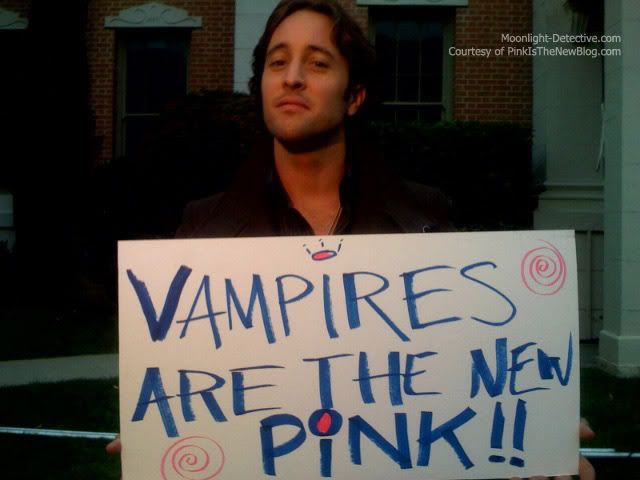
Some of these offerings have been excellent.  The Battlestar Galactica series is some of the best science-fiction television ever created, miles ahead of its contemporaries just as its predecessor was ahead of its own.  Virtually all of the updating is, in my opinion, a good thing.  The plots are more intelligent, harrowing, and even moving--addressing concerns lurking in the heart of modern America.

The new Batman franchise is a similar breath of fresh air.  While Batman Begins was an excellent film in its own right, many are saying that the Dark Knight has transcended the genre, become something more than any other so-called "comic book" movie before it.

These movies stand as great examples of how to do revisionism: take the heart of what is good about the original material, show respect for the franchise and its history, and then deepen it for the newcomer and fan alike.

Then there are countless examples of revisionism gone terribly wrong.

Planet of the Apes.  Dukes of Hazzard.  Scooby-Doo.  Psycho.  Wild Wild West.  Godzilla 2000.  Starship Troopers.  (Okay, that last one wasn't quite a remake of a movie or TV show, but a book adaptation that might be the worst ever).

Each one of these movies tried to take the trappings of their predecessors and sell them without understanding the heart of the original.  Worse, they had no respect for the fans of the franchise and what they considered to be its enduring value.

Two franchises that are awaiting judgment:  the new Bond series with Daniel Craig and the forthcoming Star Trek movie featuring characters from the original series.  The new Bond is very good, but it is definitely a re-visioning of Bond, his character, and his world.  This is not the Bond we know and love, but something new.  So far, so good, but it will remain so only if they figure out how to scale back the brooding and the brutality and make him fun again.  Bond is not meant to be a treatise on international relations and how they play out in the life of actual operatives--Bourne already did that.  Bourne ain't Bond.

And (thanks Shazammm for getting me all stirred up about it) the preview for the new Star Trek movie?  This looks like it might be in the running for worst revisionism ever.  At this point it is way too soon to tell.  I sincerely hope I'm wrong and they didn't have enough of the movie put together to do it justice in the trailer.  But is this really Star Trek?  Or anything even in its orbit?  We'll see.

Wednesday, November 19, 2008

Tired of vampire fiction? Wonder why it's so popular? Here's one take...

I haven't liked a vampire novel since Bram Stoker's Dracula.  Haven't liked a vampire movie since Lost Boys.  I would rather be trapped in a room with ten thousand pages of Harry Potter meets Firefly fanfic than pick up Meyer's Twilight series, let alone anything by Laura K. Hamilton.  I've wondered why people are  gobbling up vampire stuff so rabidly.

Somebody wrote up a plausible commentary on the topic.  Here's the relevant bits:

"Here lies one of the unique pleasures that the vampire romance can provide for its female readers: the opportunity to enjoy an 18th- or 19th-century courtship while remaining a 21st-century woman.

"The problem with historical romances is that if you want a man who behaves like Mr. Darcy, you have to live within the constraints imposed upon a woman like Elizabeth Bennet; in addition to the lack of voting rights, credit cards and any chance of pursuing a profession, there is the fun-squashing little matter of virginity taboos. In order to bask in the chivalry of a Regency-era gentleman, a modern woman can be magically transported back to his time (another popular romance device), but she'll still be stuck in a society where she hasn't mastered the rules and her freedoms are severely curtailed.

"Make the gentleman immortal and he brings with him into her modern world not only his ancestral estate and fortune, but an anachronistic understanding of how to treat a lady. Replete with old money, the vampire hero has plenty of leisure time to embroil himself in politics (fictional vampire societies tend to be complex and conspiracy-ridden hierarchies) and to woo the heroine."

I find all this a little creepy, and very sad. What does it tell us about the American sexual-industrial complex that women feel a need to fantasize about undead blood-feeders in order to imagine a courtship in which men are less, well, predatory than they seem right now?

A little creepy? Sad?  Me thinks so too.

Sunday, November 16, 2008

What does hope look like for America's poor?

Throughout the last election, one of the recurring themes of both candidates was a concern for America's poor.  We heard countless stories told by either candidate about real people who were struggling to get (or keep) a foothold in the ongoing race to pay the bills, own a home, and generally get on with the kind of life most of us take for granted.

In recent years, the conversation within the church has turned toward a greater focus on helping the poor that are all around us.  Rightly so, the church brings the words of Jesus to bear on the comfortable, the selfish, and those who make an idol out of riches and security.

Along these same lines, I recently ran across a provocative question:  is the American dream still alive?  Can someone who is poor go from nothing to a comfortable living by the old American virtues of hard work, determination, and discipline?  I have to admit that when I was posed the question, I didn't have a ready answer.  The culture around us seems to be telling us that the American dream is no longer true--and perhaps it never was.  A sobering thought for those of us who care at all.

But how does one actually begin to find out the answer to the question?  Certainly not by listening to our culture or breathing in the sensationalism of our media.  Then how?

What if somebody just plain tried it?  Take an ordinary person, give them $25 and a backpack.  In one year, can they work themselves up to an apartment, a car, and a steady job?

This guy did just that.  And then he wrote a book about it.  Let me be clear--I haven't actually read it, only surfed around it and flipping through it.  But you can't beat the back cover copy:

Adam Shepard graduated from college in the summer of 2006 feeling disillusioned by the apathy he saw around him and incensed after reading Barbara Ehrenreich's famous works Nickel and Dimed and Bait and Switch—books that gave him a feeling of hopelessness over the state of the working class in America. Eager to see if he could make something out of nothing, he set out to prove wrong Ehrenreich's theory that those who start at the bottom stay at the bottom, and to see if the American Dream can still be a reality.

Shepard's plan was simple. Carrying only a sleeping bag, the clothes on his back, and $25 in cash, and restricted from using previous contacts or relying on his college education, he set out for a randomly selected city with one objective: work his way out of homelessness and into a life that would give him the opportunity for success. His goal was to have, after one year, $2,500, a working automobile, and a furnished apartment.

But from the start, things didn't go as smoothly as Shepard had planned. Working his way up from a Charleston, South Carolina homeless shelter proved to be more difficult than he anticipated, with pressure to take low-paying, exploitive jobs from labor companies, and a job market that didn't respond with enthusiasm to homeless applicants. Shepard even began donating plasma to make fast cash. To his surprise, he found himself depending most on fellow shelter residents for inspiration and advice.

Earnest, passionate, and hard to put down, Scratch Beginnings is a story that will not only inspire readers, but will also remind them that success can come to anyone who is willing to work hard—and that America is still one of the most hopeful and inspiring countries in the world.

I have to buy this book just because the guy deserves the money for trying it.  What about you?  Do you think this is just propaganda?  Do you think the American dream is dead?  Alive?  Just a myth?  What do you think is truly the hope of the poor?

Monday, September 8, 2008

Is November here yet?

Anyone else tired of the campaign season?  Is it November yet?  When will the news feature a single story that is not tied directly to the glories or failings of one of the presidential hopefuls?

Don't get me wrong, I'm interested in politics.  I participate in our political process.  I even try to make sure I am properly informed about what is happening in the political sphere and what the physical and moral consequences of my voting or not voting has on my neighboring Americans.

That said, this has been the longest campaign in American history (if you count the insane battle for the Democratic Party primary).  I am very, very tired of every would-be journalist echoing someone's else's sensationalist commentary on the latest eye twitch or turn or phrase which could be interpreted this-way-or-that.  I am tired of pithy soundbites, no matter what I think of either political candidate.  I am tired of the bumper stickers.  I just want the vote to hurry up and get here and see the chips fall where they may.  The presidential election is important to the future of this country, but there are other things that need our collective attention.

Apparently, I'm not the only one who thinks so.  As usual, our friends at First Things say it best:
By my reckoning, the inanities of mass politics in a democratic society are a necessary evil. Campaigns must be conducted. Candidates need to have talking points. Political parties have to close ranks and push for victory. And I recognize the inevitability of the ever-growing, para-political world of media commentators, think tanks, lobbyists, magazines, bloggers, and grassroots movements. Who wins matters, and we are rightly invested in the outcome of our elections.

But I worry. I worry about friends who seem to vibrate with anxiety over the thought of this or that candidate being elected. I worry about others who seem to invest undue confidence that their highest moral and spiritual ideals will triumph if their favored candidate is elected. And most of all, I’m amazed at the serious attention that seemingly intelligent people give to the passing ephemera of the news cycle. Have we convinced ourselves not only that politics matters, but that it matters most of all? It’s an unfortunate mistake.

Monday, July 21, 2008

Want cheap power for that electric car you will most certainly buy?

image Once in a while, if you watch carefully, you will notice that someone you know is a future-altering genius.  But when that same mild-mannered friend gets quoted in a gushingly positive article in Popular Mechanics, you do a double-take.

I met Jose (that's Dr. Reyes to you) at a smallish church in Corvallis while in school for computer engineering.  This friendly, positive, and encouraging guy was a deacon in the church (over what responsibility, I'm not sure I never knew).  He led singing at the church once in a while, and was always interested in what was going on in the college ministry, despite the fact that (when I was there), his kids were in elementary school and junior high.

Over the years, his daughter married my best friend.  She now leads singing at our church.  And the humble, song-leading deacon from the Circle Church of Christ turns out to be not only the head of the nuclear engineering department at Oregon State University but also a co-founder of a startup energy company poised to change the face of American energy.image

You can read the details of his remarkable (and portable!) micro-reactor core at the Popular Mechanics site.  The guys there seemed very pleased with the implications of his design, and surprisingly, the public comments on the article are also substantially positive.  Ain't that a switch?

I guarantee the next few years will see an explosion of electric and electric-assisted cars.  You are going to own one.  And I have a feeling that the energy which pushes the electrons around in that battery pack under the hood is going to come from Dr. Reyes' brainchild.

(Here is some more information on NuScale and its competitors...)

Friday, July 18, 2008

Putting the stock market into perspective: recent and long term trends

image The stock market has been limping along ever since 9/11, right?  We're in a serious economic recession, right?  Wrong.

I remember the huge dotcom burst in 2002-2003, because I felt it in my then-stock-rich portfolio.  At one time, I was sitting on more than $80,000 in options had I cashed in at the peak of the roller coaster.  Ouch.

I remember those days with a bit of an ache in my side, and in listening to the news and economic outlook throughout the Bush administration, I would be forgiven for thinking that we had never really recovered economically from that situation.  The stock market was hot, but it broke, and it's been limping along ever since.

As usual, listening to the media and the hubbub of coffeeshop economists leads to a radically erroneous perspective on the simple facts of how our nation is doing.  The chart above, taken from a thoughtful and comprehensive article on "how we're doing" as a nation, reveals that public perception is just plain foolish.

The stock market has been accelerating significantly in the past few years and there appears to be no end in sight.  Not even a Bear-Stearns situation can really rock the boat on the long term growth of stocks.

Is it simply too much to ask that we (1) refuse to allow media sensationalism to affect our economic outlook and (2) stop grousing about "the economic downturn" when we really have no idea what we're talking about?

Of course, I'm not going to stop complaining about the price of gas anytime soon; I don't care how much it costs in England.  (fade out, to the tune of Money for Nothing: "I want my, I want my SUV")

Tuesday, July 15, 2008

Good soil for crazy theories: what's happening to the minds of our nation?

image Many of the thinkers which are trying to understand the shift from a modern to a postmodern perspective say that today's emerging culture is allergic to the "metanarrative", the grand story which tries to explain everything. The fear, or so it is thought, comes from granting one particular metanarrative too much power. It does not matter if a metanarrative can accurately enable someone to understand and explain events, because such motivations mask a desire to manipulate and control others.

Frank Furedi writes an amusing article which anticipates the coming round of conspiracy theories which will undoubtedly be generated by the report on the seventh tower, soon to be released by the National Institute of Standards and Technology. He says that the conspiracy theorists (both left and right) will dismiss the report without reading it, since they are not concerned with argumentation. They are concerned with attempting to ferret out the hidden figures behind the events, the evil powers which control the destiny of the world.

I have always loved listening to conspiracy theories, for two reasons. First, the theories are always amusing in their elegant and diabolical simplicity. From a particular point of view, if you sort of squint, you can see why they might think that--and that gives you a little thrill that "you've seen through the facade and know the TRUTH". The second reason is that it is so fun to watch the theorists themselves as they expound their theories. Their eyes glaze over, a fiery passion wells up in their speech, and you see that they take this stuff so seriously, somewhere along the line they've slid into cookyness.

But what happens when a whole culture begins to buy into conspiracy-like thinking? What happens when people give in to the laziness of thinking and thrill of (false) secret knowledge which permits conspiracy theories to propagate? It's one thing to turn on a cable access channel and see Joe with his tinfoil hat warning against the dangers of Captain Bush and the New World Order. It's another thing entirely when members of congress stand with Charlie Sheen and "report the truth."

Furedi writes:image

"History shows us that nothing is more frightening than when a community lacks a system of meaning through which it can understand the problems it confronts. In such circumstances, people feel powerless and confused, and are sometimes drawn towards a simplistic version of events where everything appears black or white or good and evil."

The Christian faith is itself a vast metanarrative. It is quite possible to take a conspiracy theorist's view of Christian faith and make of it a mockery of reason. It is easy to take Christian concepts and symbols and paste them simplistically over the world around us and arrive at the same silliness of black-and-white, us-and-them that marks the conspiracy theorists.

And yet, I find it comforting that within the metanarrative of Christian faith, the tendency and clear teaching is against this sort of thinking. Instead of looking outside, instead of discerning behind every bush (pun intended) for some causality of the pain and evil we experience, the Christian faith reminds us that much of that evil we experience comes from within. Our world is broken by ordinary evil, propagated by ordinary people in the course of their (sometimes) well-meaning lives. That sort of teaching doesn't make for the exciting, breathless conversations of conspiracy theorists. It doesn't thrill my blood to know that I contribute daily to my own suffering and the suffering of the people around me.

But I am comforted to know that it will not always be this way; and that even now, the grace of God is breaking through into our world in unexpected ways, and that there is One who is working to upend, reverse, and heal the catastrophic evil--and the ordinary evil--that is stirred into the pot of our experience every day. And I am comforted to know that there is someone working within me that is helping me to put aside those ordinary evils and replace them with unexpected goods.

"Oh, what a miserable person I am! Who will free me from this life that is dominated by sin and death? Thank God! The answer is in Jesus Christ our Lord." St. Paul, Romans 7:24-25

Sunday, July 6, 2008

Archaeology stirs the "historical Jesus" controversy

image Somebody is always digging up new evidences that throw into fresh relief historical evidences of various kinds.  Here we have a stone which dates to the 1st century, and on its face is written text which reflects thinking about a resurrected Jewish messiah figure. 

This latest discovery is being pounced upon by scholars of all stripes; should be interesting what their wrestling uncovers.  Here's a blurb from Ben Witherington's blog:

There just isn't enough controversy in Israel these days about Jesus, his death, burial and his resurrection. So, adding a little fuel to the fire is the revelation that comes from the finding of a substantial inscribed stone, probably dating to the first century B.C. that may refer to the death and resurrection of some sort of messiah figure. Here is the link to the NY Times which Bill Barnwell has kindly reminded me of, as I seem to have missed it.

http://www.nytimes.com/2008/07/06/world/middleeast/06stone.html?hp

I take quite seriously the authenticity of this stone, since Ada Yardeni has weighed in on it, and found it genuine. So let us suppose it is genuine-- let's ask the question, So what?

So what indeed.  My prediction is that conservative scholars will come up with ways that this more firmly establishes the historical record as understood by current NT scholarship by the likes of N. T. Wright, Witherington, and others.  At the same time, progressive scholars will attempt to show how this undermines the current thinking and shows that Jesus wasn't who he says he is in the canonical NT.

So, a small typhoon has erupted that will stir everything up--and then put things back exactly as it found them.